Monday, April 25, 2011

Practical Knowledge

I've just finished reading the book, "Outliers" by Malcolm Gladwell. And just like any of my other readings, I always take important notes. So I've highlighted a lot of good points in the book. Actually, there's so many that's worth keeping and sharing.  But there's one part that has struck the head out of me and feel the urged  to write about.  And that's about  "Practical Knowledge."  Something that I've been trying to explore in my mind while reading.  For the reason that, it's the thought  that explains a portion of me.

In chapter 4 - The Trouble with Geniuses, Malcolm Gladwell wrote the case of Christopher Langan.  The man whose IQ measured one ninety-five, more than that of Einstein's one fifty.  And as described in the book -  "too high to be accurately measured."  Malcolm then delved into the life and history of Chris Langan, and cited a better understanding to why inspite being a genius, he still ended-up unsuccessful in life. He compared him with another genius named Robert Oppenheimer, who was equally bright like Chris Langan.  The difference he pointed out between the two  was their  family background which became the defining factor why  Oppeneimer became by far more succesful than Langan.

Through Malcolm's study of their backgrounds, he was able to give a very interesting explanation to these two genuises, and why they both ended-up on the opposite sides of success.  The theory of psychologist Robert Sternberg was the one he noted to make his point strongly convincing.  And here's what it says on the book:

"... To Sternberg, practical intelligence includes things like "knowing what to say to whom, knowing when to say it, and knowing how to say it for maximum effect. " It is procedural: it is about knowing how to do something without necessarily knowing why you know it or being able to explain it. It's practical in nature: that is, it's not knowledge for its own sake. It's knowledge that helps you read situations corectly and get what you want. And, critically, it is a kind of intelligence separate from the sort of analytical ability measured by IQ. To use the technical term, general intelligence and practial intelligence are "orthogonal": the presence of one doesn't imply the presence of the other. You can have lots of analytical intelligence and very little practical intelligence, or lots of practical intelligence and not much analytical intelligence, or - as in the lucky case of someone like Robert Oppenheimer - you can have lots of both.

So where does something like practical intelligence come from? We know where analytical intelligence comes from. It's something, at least in part, that's in your genes...IQ is a measure, to some degree, of innate ability. But social savvy is knowledge. It's a set of skills that have to be learned. It has to come from somewhere, and the place where we seem to get these kinds of attitudes and skills is from our families."*

I remember when my sisters' and I were in high school, everytime somebody in school would know that I was  related to either one of them, they'd say, "..so you're the sister of ____?" And when they'd introduce me to other girls, they'd say the same thing - "..she's the sister of ____"  Yes, it was clear that I didn't have any distinctive identity in school but the "sister of ___."  And this could either be my older or younger sister.  This was because my two sisters were straight A's students and both of them were popular in school for being top achievers. While I, on the otherhand, was the "forgettable" one.  The one who lived in the shadow of the sister.

I considered myself a shy and average type of student in school.  While my sisters were marching up the podium several times to receive awards and medals, I was out there having fun and mocking with friends. I didn't care if my grades were B's.  For as long as I didn't have failing grades, I was ok with that. What I'd love to do was to spend the day hanging out in the library checking out all the books in circulation, or chitchatting with friends on the school grounds.

When we all went to university, my sisters' still continued to collect A's and even became scholars and cum laude, while I was still the same content student just getting by with  fair grades.  I never got jealous or bitter though with what my sisters achieved academically, even if my parents would brag about them profusely to every friends and relatives.  I would just be on the sideline listening and waiting to be called  - "...the sister of ____", and in return I'd show them my cheekiest smile.

Today, I already have my own identity.  I don't live in the shadows of my sisters anymore.  Though I've never been an A student or a scholar/cum laude, I'm equally successful as my sisters. Success in my definition as having a comfortable and secure life(that includes monetary). Like,  I get to purchased my own car and home with my own earnings without seeking financial assistance from my parents or sisters.  I'm living the kind of life I've always wanted to have. And whenever I look back, I keep wondering how I get here knowing that I've never excelled in school- that I'm always the shy gal who's just cool with a fair mark. But there's one thing that's prominent in me though,  I love taking risks and meeting challenges.  If at times I feel awkward, I choose a character to get by a situation. I don't know, but I just know how and when to deal with stuff.

There are also few people I know  from school who's just average student like me, but now I'm surprised to hear how successful they are in their own chosen field.

So should I say that we all have one thing in common? That we are not geniuses but still smart ones; that probably we don't have (or have less) analytical knowledge, but we have more "practical knowledge."

When I analyze it, I believe the theory is correct and Gladwell has explained it very well. What he has just missed-out here is the correlation between "common sense" and "practical knowledge" which I think has the same nature and degree of relevance.  And which can provide more reasoning why some low-key people are smarter than the highly educated ones... But about the assumption that we get it from our family,  that part for me is a little bit shady and needs more thoughts.


___________
*"The Trouble with Geniuses, Part 2", pp 101-102, OUTLIERS by Malcolm Gladwell

Wednesday, April 6, 2011

Happy 125th Birthday Vancouver, BC!

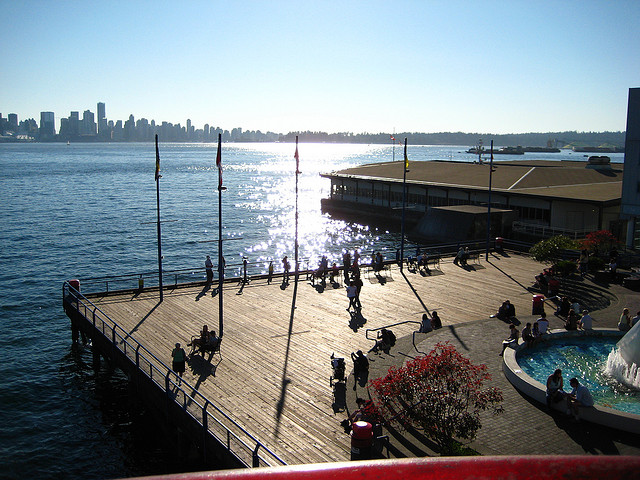
Vancouverites are celebrating a special day today. And of course, there's lot of fun activities downtown.  It always delights me to hear exciting news like this because it reminds me of  bubbling Vancouver a year ago...

The global early news posted a question to the viewers this morning: "What's your memorable moments in Vancouver?"  As I heard this, the 2010 winter olympic popped up right away in mind. 

Yes, it was the winter olympic that was the most distinct to me because I'd never seen this city flocked by so many people at one time.  And the canadian spirit was so overwhelming!...Like I always say - it was viral...

Here's how I journalized it in my facebook account.


Little Red Maple Leaf by Myla Palisoc on Wednesday, February 24, 2010 at 9:47am

Red is the trend dominating these days in Vancouver. I'm not really a big fan of color red. But it reminds me of my mom. It's her big time favorite hue, and those times, I thought she's over indulging with it. But lately, I've realized red offers a lot of delectables in variety. When added with black, it creates drama. When mixed with bright colors, it lights up the mood. When matched with white, it definitely signifies distinction. That's why most flags have red color in it...Like this little red maple leaf with a white background.


It's just everywhere in town...A maple leaf mark on the cheek of a little girl; another on the muppet hat of that hunky white guy; on the hooded jacket; on the scarf; on a jersey shirt; on the shoes, wrist, and I wonder where else they've tatooed the maple leaf that's unheard of. And of course, not to forget the very apparent canadian flags that's standing at every named stalls or gizmos around. You name it. They flag it. Everybody is loving it, and no one can't get enough of it. Even me, the not-so-into-it person, is hooked up to this contagious patriotism.

I've never seen this much patriotism in my whole life. I find that these are patriots of a different kind. They're not people who are protesting to oust a dictator; or fighting for justice and freedom; or rallying for an important cause. But they are citizens who come together; raising their fist for their team, and cheering gold for their country. Wow! what a fun way to be a patriot. So overwhelming to watch; So ground-shaking. It gives me goose bumps.


I'm not usually a crowd person. And if there's any way for me to avoid it, I don't hesitate. I prefer watching from afar and gauge the outcome. But on this occasion , for some reason, this time I want to be there. I want to be one of them, because I sense a magnitude of positive energy. I want to feel it and have it too...And so there I go, been here with the crowd of canadians for two weekends now. No matter how stifling it is because of the long walk and wait, but I still merge with the over enthusiastic canadians.


The energy is just so enormous. The spirit is high. Again, it's contagious. It's infectious. Where in the world can you find a crowd that emits so much positive energy? Where else but here in the olympic games, I guess. Now I know why participant countries grappling hard to take their chance to host the games. It's because of the positivity it brings to their country. But do all these participant countries have the same degree of patriotism in their land during the olympic? Or is it just the canadians?


Nevertheless, it's a good feeling. And if patriotism is a contagious disease, I don't mind getting it. Because it makes me feel significant. When they see me wearing the red leaf, they smile. It's a confirmation that I'm part of their team. And why not? This is my foster home now.


In a few days, the games will close. Every Canadian will go back to their simple life in their quiet town. But everyone will always remember these days in Vancouver. The days where every single Canadian becomes a true patriot...


Well of course, I have a snapshot of my tiny olympic moment as well. I don't want to miss it --This once in lifetime positive patriotism in Vancouver 2010 Winter Olympic.

My little red souvenir in downtown Vancouver.  The crowdest place on earth 24/7 last February 2010.

Friday, April 1, 2011

Over the rainbow

Somewhere over the rainbow way up high...
...Somewhere over the rainbow skies are blue
      And the dreams that you dare to the dream,
          Really do come true...


  As we struggle with the harsh reality of life, this glimmering horizon promises good things ahead...
    ...And for the fallen and the broken, there's hope waiting over the rainbow.

 ...If happy little blue birds fly
       Beyond the rainbow
           Why, oh why can't I?

Wednesday, March 30, 2011

I'm up for a "challenge?"

There's an email circulating at work about a "fitness challenge" organize by one of our partners in trade.  How the challenge works is, we have to pick one from the 4 fitness options:

Option 1: Exercise at least 30 minutes per day, minimum 3 times per week = total of 30 times over a 68 day period.

Option 2: Option 1 + 1 lifestyle change for duration of Challenge (i.e. no caffeine, increase water intake daily, no pop or no alcohol etc.)

Option 3: Push your limits with exercising a minimum of 30 minutes for all 68 days of the Challenge!!!
(Note: if you miss a day – on one occasion per week you are permitted to work out for 60 minutes to make up for the missed day. This is only permitted once per week as the goal is to have fitness in your day – everyday).

Option 4: Option 3 + 1 lifestyle change

This should be done for 68 days from April 4th to June 17th.

A lot of my co-workers has signed-in to the challenge.  It just started with 2 people interested, then 7, and just today, 11 have listed to participate.  Almost everybody has shown interest, but me.

Everytime I see these emails pop up, I ask myself, "Do I need a fitness challenge?". Then a negative voice inside me would whisper, "Oh it's just a fad. I know they're just joining to be in the circle".  Because I know when you say "fitness", this has to do with overweight issues.  And I don't know if I need  this challenge. Besides, I'm already practicing a healthy lifestyle. However, it seems like I'm the only one who's not participating in this challenge.

So as I'm wondering why this doesn't stir my interest, my co-worker, who's assigned to spearhead this, approach me. 
"Do you wanna join the fitness challenge?"

I replied, "Do I need a fitness challenge?", while looking uncertain and  intently at her.  And she stared back at me puzzled.

Then I brushed off  my  thoughts and said, "...I was just asking myself..."  Yeah, it's actually a hypothetical question. And I added, "What do I need to do?"

"You can walk half an hour everyday", she replied

"But I always do that!" I burted again...

"Then there you go!", a voice surprisingly barged in. It's my co-worker across my workstation.

"Ok...sure...if it doesn't change any of my habits", I jested.  And they laughed along. 

After that, I realized I sounded really indifferent and apathetic.  So I contemplated more and ask myself  why I have this persisting disinterest to this challenge.

And this is what I came up with:

First and foremost, I'm not overweight, but actually underweight.  And if there's anything that I'd have to do is increase my 90lbs weight, which I've always been trying for the longest time.  But it seems through all these years, I've never been successful.  No matter what I feed myself, I've never left this number 90.  I couldn't forget what my mom told me during her visit,  "Can you please gain weight!"   So until now, I'm still in the process of finding a way.  But someone has told me long ago - it's my metabolism. 

Second, I'm a very active person. I always find something to do. When I'm at home, I'm either vacumming the floor; decluttering my already neat space; or hanging out in my kitchen - cooking. And when I'm out, I'll be everywhere -just walking around. The only time I am still, is when I'm sleeping or sick.  So about  walking as exercise, it's not really new to me.  I've been walking all my life.  And I don't even consider it as exercise or fitness regimen. Walking is part of my lifestyle.  I even walk and run in heels. So where's the challenge to option 1?

The last reason is, the options they've laid is not as challenging to me that I've been  wanting to be a part of.  Maybe if they organize something more vigorous and stringent, like  "ala-amazing race" challenge, where my adrenaline rush would be tested to the limits. Then, I will be the first one to sign-in. That's the challenge I want to experience. Actually, it's my wish to be a contender for the Amazing Race.

But now that I've agreed to participate, am I really up for a challenge?  Or should I just take it like a walk in the park so I won't be called corny by my co-workers. And instead, just challenge myself with more exciting things...Well, I know I'll be starting again with my yoga-pilates this season.  And there's the ice skating that I'll be doing with my friend this summer...the biking I'm planning...ballroom dancing I want to take...swimming...travel...hmm? What else?...

Tuesday, March 15, 2011

Disaster Recovery Program

The earthquake that happened last week in Japan is overwhelming.  Everybody is rattled with the subsequent events.  And our office is one of those shaken by fear because we are partly Japanese-owned company... Actually, two of our bosses were there at that time it happened, and they said that our Tokyo office was significantly damaged as well.

It was a coincidence that the night before I learned about the news, I was with my groupmate discussing our case study in records management course.  And one subtopic that I was particularly uncertain  about was the disaster recovery plan.  It took me days to write the report and prepare the presentation. It was easy to state the problems and determine our objectives and goals, but figuring out a suitable disaster recovery program was hard. 

Then I wonder after looking at the aftermath of Japan's earthquake,  do they have a disaster recovery plan? 

It's a fact that disasters are inevitable.  There are people who attempted to tell future calamities, but nobody has been accurate about the place and date.   Like when a seismologiest forecast a forthcoming earthquake. He can only project particular region or time, but can't say the exact  date, place and intensity.  This shows that our intellect is still short to understand how the forces of nature works.  Many have tried. Probably a few came close to the phenomenon.

So how do we deal with it when it happens then?  No can really exactly what to do especially if you're caught by surprise.  I guess the best way, is to be ready and prepared at all times.  And when we say ready, we mean - having the tools and resources for the aftermath. 

It's surprising that when you google the word "disaster recovery plan", you'll see a bunch of IT-related computer recovery programs; including, the business-related recovery plans.  But none about disaster recovery for natural calamities.  Or maybe there is one out there, but no one has spread the word yet.

During one of our class in records management,  one organization named Belfor has spoken about records recovery program.  They've done a presentation on the Cayman Island's records recovery after it was hit by a devastating hurricane few years back.  They've shown a thorough presentation that I couldn't imagine how much extensive and tedious to do records recovery. It took them an exasperating 2 years to finish the whole work in reviving Cayman Island's vital records.  I was impressed with the results.  I'd say they are really experienced in this field, but probably took them many years to be fully trained, equipped and knowledgeable in this disaster recovery program... I bet they may be called to do records recovery too for Japan because of their expertise.

So I wonder, what if there's a disaster recovery group like Belfor to come during natural disasters like this one in Japan, and likewise the one in New Zealand.  Then perhaps it will bring great relief to the victims, and get assurance that a full rescue and recovery is underway.

With the frequent occurrence of natural disaster these days, this is probably a good idea. A world organization that looks only after natural disasters.   Just like the  UN Environmental Programme and the UNICEF World Hunger Program that's working only for that particular task  around the clock. And that this particular organization will provide all the training, resources and manpower before, during and the aftermath. 
Everybody knows that Japan is the most technologically advanced country, and the most emergency prepared citizens.  But still, this disaster has caught them off-guard.  And no one expected that their supplies would be depleting. 

I know the feeling of being in this predicament for my family when a great flood plagued Manila 2 years ago. My sister and I were just watching  and waiting for what's the next to come -  feeling so helpless.  And the hardest part they went through after the flood was the recovery period.  It took them a year to get back with their lives, with occasional fear of that same episode everytime an alarming storm threatens the country.
The signs are showing that the earth is extremely vulnerable, and another disaster may develop.  Where and when, we don't know.  But there's something we can do - gear ourselves with disaster readiness and recovery preparedness plan.

I thought I wouldn' find a disaster and emergency information website.  But here's one handy with resources and tips:   http://www.fema.gov/plan/index.shtm

Wednesday, March 9, 2011

Can't wait

So tired of this gloomy weather and freezing rain,
Don't even like that winter's hanging out awhile,

What I'm longing is a lovely day and clear skies,


Get out there, get a little basking in the sun

Then if gets too much, there's always that mighty shade,

And sunset that promises another bright day.


Yeah, I just can't wait for that summer time again.

Sunday, February 27, 2011

What's going on here??

I found this in my email. 

Are we ever in trouble in a few years from now.
The following questions were set in last year's GED examination
These are genuine answers (from 16 year olds)............and they WILL breed.

Q. Name the four seasons?
A. Salt, pepper, mustard and vinegar.

Q. Explain one of the processes by which water can be made safe to drink,
A. Flirtation makes water safe to drink because it removes large pollutants like grit, sand, dead sheep and canoeists.

Q. How is dew formed?
A. The sun shines down on the leaves and makes them perspire.

Q. What causes the tides in the oceans?
A. The tides are a fight between the earth and the moon. All water tends to flow towards the moon, because there is no water on the moon, and nature abhors a vacuum. I forget where the sun joins the fight.
Q. What guarantees may a mortgage company insist on?
A. If you are buying a house they will insist that you are well endowed.
Q. In a democratic society, how important are elections?
A. Very important. Sex can only happen when a male gets an election

Q. What are steroids?
A. Things for keeping carpets still on the stairs (Shoot yourself now, there is little hope!)

Q.. What happens to your body as you age?
A. When you get old, so do your bowels and you get intercontinental.

Q. What happens to a boy when he reaches puberty?
A. He says goodbye to his boyhood and looks forward to his adultery. (So true!)

Q. Name a major disease associated with cigarettes.
A. Premature death.

Q. What is artificial insemination?
A. When the farmer does it to the bull instead of the cow

Q. How can you delay milk turning sour?
A. Keep it in the cow. (Simple, but brilliant!)

Q. How are the main 20 parts of the body categorised? (e.g. The abdomen)
A. The body is consisted into 3 parts - the brainium, the borax and the abdominal cavity.
The brainium contains the brain, the borax contains the heart and lungs and
the abdominal cavity contains the five bowels: A, E, I,O,U.. ( WTF!)

Q. What is the fibula?
A. A small lie

Q. What does 'varicose' mean?
A. Nearby

Q. What is the most common form of birth control?
A. Most people prevent contraception by wearing a condominium (That would work!)

Q. Give the meaning of the term 'Caesarean section'.
A. The caesarean section is a district in Rome.

Q. What is a seizure?
A. A Roman Emperor. (Julius Seizure, I came, I saw, I had a fit.)

Q. What is a terminal illness?
A. When you are sick at the airport. (Irrefutable!)

Q. Give an example of a fungus. What is a characteristic feature?
A. Mushrooms. They always grow in damp places and they look like umbrellas.

Q. Use the word 'judicious' in a sentence to show you understand its meaning.
A. Hands that judicious can be soft as your face. (OMG!)

Q. What does the word 'benign' mean?
A. Benign is what you will be after you be eight. (Brilliant!)
Ha ha ha....